

ESPHome 2025.10.0: Z-Wave Proxy and Arduino as an IDF component



Release Overview
Section titled “Release Overview”ESPHome 2025.10.0 delivers major architectural improvements, new communication protocols, and extensive performance optimizations. This release focuses on enhancing security, improving memory efficiency, and expanding hardware support while introducing groundbreaking new features.
Key Highlights:
- Z-Wave Proxy - Bridge Z-Wave devices to Home Assistant through ESPHome
- Arduino as IDF Component - Unified ESP32 framework architecture (breaking change)
- Enhanced ePaper Display Support - New unified SPI ePaper component
- Security Enhancements - SHA256 OTA authentication, password deprecation, and API hardening with OOM protection
- API Improvements - Home Assistant action responses and configurable connection limits
- Extensive Memory Optimizations - Flash and RAM savings across all platforms
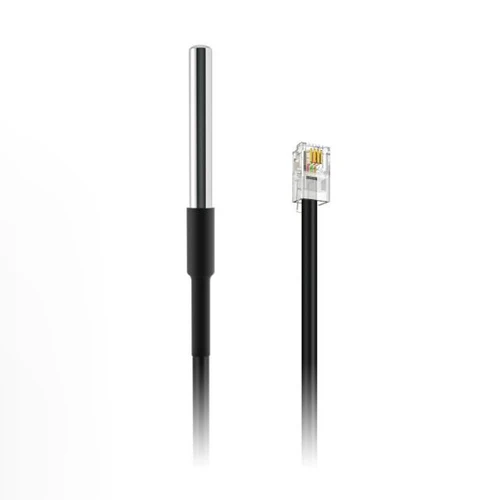
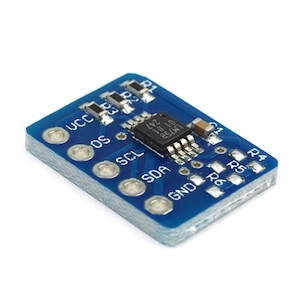
- New Sensor Components - WTS01 and LM75B temperature sensors
Z-Wave Proxy
Section titled “Z-Wave Proxy”The new Zwave Proxy component enables network-based connectivity for Z-Wave hardware by proxying serial communication between a Z-Wave modem SoC and Z-Wave JS over WiFi or Ethernet. This component was specifically designed for the Home Assistant ZWA-2 Z-Wave Adapter, which combines an ESP32 and a Z-Wave modem in a single device, but could support other Z-Wave hardware in the future.
Key Features:
- Remote Z-Wave placement - Position your Z-Wave modem anywhere in your home with WiFi/Ethernet connectivity
- Serial-to-network bridge - Proxies UART communication between Z-Wave hardware and Z-Wave JS via ESPHome’s native API
- Flexible deployment - Use ESP32 devices to extend Z-Wave modem placement beyond USB cable reach
- Low latency performance - Achieves 50-60ms typical latency (as low as 35ms under ideal conditions)
- Ethernet recommended - Best reliability with wired connections, though WiFi is supported
This component is particularly useful for optimizing Z-Wave mesh network topology by placing the Z-Wave controller in a central location, even when your server is in a basement or closet.
Arduino as IDF Component (Major Architectural Change)
Section titled “Arduino as IDF Component (Major Architectural Change)”This release includes a fundamental change in how ESP32 Arduino builds work - Arduino is now integrated as an ESP-IDF component rather than a separate framework. This is the biggest architectural change for ESP32 in ESPHome’s history.
Previously, Arduino came as a precompiled framework with everything baked in - you got whatever upstream decided, whether you needed it or not. This led to bloated builds that often couldn’t even fit on devices with limited flash space. You were stuck with the upstream choices and locked out of ESP-IDF features.
Now Arduino is built as an ESP-IDF component alongside your configuration. ESPHome compiles only what you actually use, eliminating the bloat. You get access to ESP-IDF features while still using Arduino libraries when you need them. This aligns with Espressif’s recommended approach and is how the Arduino ecosystem is evolving.
Memory Savings:
- 20-30KB RAM savings on Arduino builds
- Additional ~8KB RAM savings if using the web server
- Smaller binary sizes overall
- Better memory efficiency through shared libraries
Development Benefits:
- Faster fixes for underlying components - Many components now share the same implementations between Arduino and ESP-IDF, eliminating duplicate maintenance
- Access to latest ESP-IDF 5.4 features while using Arduino libraries
- Reduced maintenance burden - One framework to maintain instead of two separate paths
- Future-proof - Follows Espressif’s direction for the ESP32 ecosystem
Build Time Trade-off:
- Arduino builds now take longer (Arduino is compiled on top of ESP-IDF)
- ESP-IDF builds are now 2-3x faster than Arduino builds
- Consider migrating to ESP-IDF if build time matters to you
Should You Migrate to ESP-IDF?
Section titled “Should You Migrate to ESP-IDF?”We recommend ESP-IDF for most users, especially for:
- Bluetooth Proxy devices (lower memory usage)
- New projects
- Configurations where you want faster builds
Arduino is still fully supported and works great if you need it for specific Arduino libraries. See our Arduino to ESP-IDF migration guide for help switching - it’s easier than you might think!
What You Need to Know
Section titled “What You Need to Know”Most users: Your configuration will work without changes. ESPHome handles the framework integration automatically.
External component developers: If you maintain external components using Arduino-specific APIs, review Espressif’s Arduino as ESP-IDF component documentation and test your components with this release.
Breaking change details: Framework version handling has been improved with stricter validation. See the breaking changes section for specifics.
ePaper SPI Display Component
Section titled “ePaper SPI Display Component”The new Epaper Spi component provides a unified, modernized interface for SPI-based ePaper displays:
Improvements:
- Cleaner configuration with consistent API across models
- Better performance with optimized refresh cycles
- Improved partial update handling where supported
- Reduced memory overhead through efficient buffering
Current Status:
Currently supports one display model, with additional models from the waveshare_epaper component being migrated over time. This new architecture provides a more maintainable codebase for future ePaper display support.
Security Enhancements
Section titled “Security Enhancements”ESPHome 2025.10.0 significantly improves security with several key changes. We conducted an internal security audit that didn’t find any privilege escalation issues but identified many hardening opportunities. We’ve addressed these in this release and will continue to focus on internal security testing in the coming months.
SHA256 OTA Authentication
Section titled “SHA256 OTA Authentication”OTA authentication has been upgraded from MD5 to SHA256 for better security:
- Modern cryptographic hashing replaces legacy MD5 authentication
- Hardware acceleration on supported ESP32 variants (S3, etc.)
- Non-blocking authentication for better performance
- Graceful transition period - Both SHA256 and MD5 are accepted through 2025.12.x
- MD5 will be rejected starting with 2026.1.0 on platforms that support SHA256
During the transition, you’ll see a warning when MD5 is used. After 2026.1.0, downgrading to older ESPHome versions will require serial flashing instead of OTA.
Bonus improvement: Extended handshake timeout (20s) makes OTA more reliable on poor WiFi connections without freezing the device.
API Password Deprecation - Heads Up
Section titled “API Password Deprecation - Heads Up”If you’re still using password authentication for the API, now’s the time to switch to encryption. Password support will be removed in version 2026.1.0.
This release adds better warnings so you’ll know if you need to update your configuration:
- You’ll see a clear warning if you’re using passwords - no surprises when support is removed
- Can’t use both - if you try to configure both password and encryption, ESPHome will stop you (this combination has never worked properly and causes connection failures)
- Easy migration - just switch from
password:toencryption:with a key - You have time - password support works until 2026.1.0, giving you plenty of time to update
WARNING
If you’re using password: in your API configuration, please migrate to encryption: before version 2026.1.0.
Password authentication will be removed at that time. You can’t use both password and encryption together -
pick one (and encryption is the better choice for security).
Dashboard Improvements
Section titled “Dashboard Improvements”The ESPHome Dashboard now uses WebSockets instead of HTTP polling for real-time updates:
- Instant updates - Device status changes appear immediately (no more 1-2 second polling delay)
- Snappier interface - Everything feels more responsive
- Lower server load - More efficient than constant HTTP polling
- Logs start instantly - The logs command now skips external component updates, eliminating 5-30 second delays when internet is unavailable
If you manage multiple devices, the dashboard will feel noticeably faster and more responsive. Viewing logs is now instant even in offline or isolated network environments.
Device Onboarding Improvements
Section titled “Device Onboarding Improvements”Getting your ESPHome devices online has never been easier. This release brings major improvements to the initial setup experience, particularly for ESP32-IDF devices and the Made for ESPHome program.
Captive Portal for ESP-IDF
Section titled “Captive Portal for ESP-IDF”This is huge. ESP-IDF devices now have full captive portal support, which means you don’t have to figure out which IP address to type into your browser anymore. When you connect to the device’s access point, your phone or computer automatically detects the captive portal and opens the configuration page - just like connecting to hotel or airport WiFi.
This brings ESP-IDF up to feature parity with Arduino for onboarding, and since most new ESPHome devices are running ESP-IDF, this dramatically improves the out-of-box experience. The implementation includes a lightweight DNS server that runs in ESPHome’s event loop, responding to all DNS queries with the device’s IP address to trigger captive portal detection on iOS, Android, and other platforms.
Improved Improv BLE Performance
Section titled “Improved Improv BLE Performance”Improv Wi-Fi over BLE is the standard way to provision ESPHome devices over Bluetooth, and we’ve made it significantly faster and more reliable:
Performance improvements:
- 26x faster service lookups for typical 3-service configurations by replacing HashMap with vectors
- 1KB flash savings plus reduced RAM usage
- Better discoverability - Device names are now visible to passive BLE scanners, making ESPHome devices easier to find on a wider range of BLE scanning technologies
Why passive scanning matters: Many home automation systems and BLE scanners only support passive scanning (not active scanning). Making the device name visible to passive scanners means your devices show up in more scanning apps and are easier to identify during setup.
These improvements directly support the Made for ESPHome program, which requires Improv provisioning via BLE for Wi-Fi projects to ensure a consistent, high-quality setup experience across all ESPHome-compatible products.
The Made for ESPHome program requires Improv BLE provisioning for Wi-Fi projects. See the certification requirements for details.
Home Assistant Action Responses
Section titled “Home Assistant Action Responses”The API now supports receiving responses from Home Assistant actions, enabling bidirectional communication:
Capabilities:
- Call Home Assistant actions from ESPHome
- Receive response data for processing in automations
- Enhanced integration with Home Assistant services
- New automation possibilities with real-time data exchange
This feature enables more sophisticated integrations, such as querying state from Home Assistant for use in ESPHome logic.
YAML Enhancements
Section titled “YAML Enhancements”Literal Substitutions
Section titled “Literal Substitutions”The new !literal tag allows raw string values in substitutions without variable expansion:
substitutions: json_template: !literal '{"key": "${value}"}'This is particularly useful for JSON templates and other contexts where dollar signs should not trigger substitution.
Dynamic Auto-Loading
Section titled “Dynamic Auto-Loading”Components can now conditionally auto-load dependencies based on configuration, reducing unnecessary component inclusion and saving memory.
Memory & Performance Optimizations
Section titled “Memory & Performance Optimizations”ESPHome 2025.10.0 brings major memory efficiency improvements, with nearly 3KB of RAM savings on typical configurations. As ESPHome has grown more capable over the years, memory usage has naturally increased with new features. ESP8266 devices with their ~40KB of free RAM were starting to feel the squeeze, and ESP32-C3 Bluetooth proxies were experiencing stability issues under load.
We’ve made these use cases much better. Through systematic optimization efforts, we’ve reclaimed precious RAM and improved stability across the board. ESP8266 users get more headroom for complex configurations. ESP32-C3 Bluetooth proxy users get better stability with multiple active connections. All platforms benefit from faster performance and lower memory overhead.
The improvements come from replacing heavy C++ STL containers (vectors, maps, sets) with lighter alternatives and moving data from RAM to flash storage where possible. Each optimization might save a few hundred bytes, but they add up quickly when applied across the codebase.
This is just the beginning - we’re continuing this optimization work in 2025.11.0 and beyond. Expect more memory savings and performance improvements in upcoming releases.
RAM Savings:
- ~3KB total RAM savings on ESP8266, ~1-2KB on ESP32 from all optimizations combined
- Lock component: 388 bytes flash + 23 bytes RAM per lock via bitmask optimization
- ESP32 BLE Server: 1KB flash savings by replacing HashMap with vectors (26x faster lookups)
- Event Emitter: 2.6KB flash savings via vector replacement (2.3x faster)
- mDNS/OpenThread: StaticVector eliminates dynamic allocation overhead
- Script names: Moved to flash storage instead of RAM
- Component metadata: Named structs replace std::pair overhead
- API: Zero-copy techniques eliminate unnecessary data copying in Bluetooth proxy, Z-Wave proxy, and base API calls (authentication, time zones), reducing allocations and improving performance
Performance Improvements:
- Logger: 35-72% faster log formatting through optimized string handling
- Web Server: Significant reduction through lookup tables and IDF server unification
- Scheduler: Reduced function call overhead
- OTA: Non-blocking authentication improves responsiveness
- USB Host: Dedicated FreeRTOS task for continuous event processing prevents data corruption during high-frequency transfers
These optimizations benefit all platforms, but ESP8266 users will notice the most dramatic stability improvements.
New Components & Features
Section titled “New Components & Features”Sensor Components
Section titled “Sensor Components”- WTS01 - Temperature sensor with UART interface
- LM75B - Popular I2C temperature sensor
Communication Features
Section titled “Communication Features”- Multiple CAN instances on supported ESP32 platforms
- UART enhancements with multiple ESP32 features and fixes
- Remote receiver demodulation support on ESP32
- Modbus courtesy responses for improved protocol compliance
Hardware Support
Section titled “Hardware Support”- LAN8670 PHY support for Ethernet
- Configurable Ethernet MAC address in YAML
- QMC5883L DRDY pin for maximum sampling rate
- USB host/UART support on ESP32-P4
For Contributors
Section titled “For Contributors”If you contribute to ESPHome or maintain external components, you’ll notice some big improvements to the development experience:
CI Testing Improvements:
- Much faster CI for large PRs - Large PR test time reduced from ~1 hour to ~20 minutes through intelligent component grouping
- Release builds 6-7x faster - Release test time reduced from 12+ hours to 1h40m
- Smarter component testing - Changed components get isolated test runners with full validation, while dependency-only components are grouped for speed
- Better feedback loops - Get results faster, making it easier to iterate on contributions
- More reliable testing - APT package caching (2m30s → 5s), retry logic for downloads, and utilization of a larger available disk partition (66GB instead of 23GB)
These improvements make it much easier to contribute to ESPHome by reducing wait times and making the CI system more efficient and reliable.
Breaking Changes
Section titled “Breaking Changes”ESPHome 2025.10.0 includes several breaking changes requiring attention:
Arduino as IDF Component
Section titled “Arduino as IDF Component”- Framework architecture change - Arduino is now integrated as an ESP-IDF component
- Impact: Build process changes, potential incompatibilities with external components
- Action Required: Test custom components, update framework version handling
- PR: esphome#10647
API Changes
Section titled “API Changes”Several API-related breaking changes improve security and efficiency:
- ConnectRequest/Response renamed to AuthenticationRequest/Response esphome#10726
- Password and encryption now mutually exclusive with deprecation warnings esphome#10871
- Configurable connection limits added with new defaults esphome#10939
- Message size limits to prevent memory exhaustion esphome#10936
- ClientInfo::get_combined_info() removed to eliminate heap fragmentation esphome#10970
- HomeassistantServiceResponse renamed to HomeassistantActionRequest esphome#10839
Component Changes
Section titled “Component Changes”- EKTF2232:
rts_pinrenamed toreset_pinesphome#10720 - MMC5603: Fixed incorrect calculation factor (values will change) esphome#9925
- ESP32 BLE: max_connections now shared between client and server esphome#11006
- Logger: Runtime tag-specific log levels conditionally compiled esphome#11004
- Lock: Internal representation changed to bitmask esphome#10977
- mDNS/OpenThread: Services storage uses StaticVector esphome#10976
ESP32 Platform
Section titled “ESP32 Platform”- Version handling improved with stricter validation esphome#10899
- Web server: IDF web server now used for Arduino builds esphome#10991
- esp-audio-libs updated to 2.0.1 with new FLAC decoder esphome#10974
Most breaking changes involve internal optimizations and security improvements. Standard configurations should continue working, but custom components and advanced setups may require updates.
Release 2025.10.1 - October 16
Section titled “Release 2025.10.1 - October 16”- [mipi_spi] Rotation fixes esphome#11226 by @clydebarrow (new-feature)
- [ota] Fix MQTT resolution when static IP appears first in device list esphome#11272 by @bdraco
- [ota.esphome] Handle blank password the same as no password defined esphome#11271 by @jesserockz
- [tests] Fix OTA password test assertions after merge collision esphome#11275 by @bdraco
- [wifi] Fix enterprise wifi esphome#11276 by @swoboda1337
- [substitutions] Fix AttributeError when using packages with substitutions esphome#11274 by @bdraco
Release 2025.10.2 - October 20
Section titled “Release 2025.10.2 - October 20”- [datetime] Fix DateTimeStateTrigger compilation when time component is not used esphome#11287 by @bdraco
- [core] Add ESP32 ROM functions to reserved ids esphome#11293 by @swoboda1337
- [htu21d] Revert register address change esphome#11291 by @swoboda1337
- [esp32] Reduce tx power on Arduino in the event of a brownout esphome#11304 by @swoboda1337
- [const] Add CONF_OPENTHREAD esphome#11318 by @danstiner
- [dashboard] Fix binary download with packages using secrets after Path migration esphome#11313 by @bdraco
- [dashboard] fix migration to Path esphome#11342 by @tomaszduda23
- [scd4x, bme68x] Fix temperature_offset to use the temperature_delta instead of temperature esphome#11347 by @Spectre5
- [core] Fix IndexError when OTA devices cannot be resolved esphome#11311 by @bdraco
- [esp32] Fix OTA rollback esphome#11300 by @swoboda1337
- [openthread] Backport address resolution support to prevent OTA crash esphome#11312 by @bdraco
Release 2025.10.3 - October 24
Section titled “Release 2025.10.3 - October 24”- [hdc1080] Make HDC1080_CMD_CONFIGURATION failure a warning (and log it) esphome#11355 by @pzich
- [uart] Make rx pin respect pullup and pulldown settings esphome#9248 by @asergunov
- [core] handle mixed IP and DNS addresses correctly in resolve_ip_address esphome#11503 by @Links2004
Release 2025.10.4 - November 4
Section titled “Release 2025.10.4 - November 4”- [uart] Fix order of initialization calls esphome#11510 by @kbx81
- Fix the LiberTiny bug with UART pin setup esphome#11518 by @asergunov
- [mipi_rgb] Fix rotation with custom model esphome#11585 by @clydebarrow (new-feature)
- [lvgl] Fix nested lambdas in automations unable to access parameters esphome#11583 by @bdraco
- [image] Catch and report svg load errors esphome#11619 by @clydebarrow
- [lvgl] Fix event for binary sensor esphome#11636 by @clydebarrow
- [sdl] Fix keymappings esphome#11635 by @clydebarrow
Release 2025.10.5 - November 11
Section titled “Release 2025.10.5 - November 11”- [const] Add CONF_ROWS esphome#11249 by @stuartparmenter
- [core] Don’t allow python 3.14 esphome#11527 by @swoboda1337
- [usb_uart] Fixes for transfer queue allocation esphome#11548 by @clydebarrow
- [lvgl] Fix rotation with unusual width esphome#11680 by @clydebarrow
Full List of Changes
Section titled “Full List of Changes”For the complete list of every merged pull request in this release, see the full 2025.10.0 changelog.
Comments